Quick answer
A cataract is a clouding of the eye’s natural lens. It usually develops slowly with age and makes vision blurred, misty or dazzled by bright light. Glasses and brighter lighting can help for a while, but no drops or exercises reverse a cataract. When it affects daily life, surgery to replace the cloudy lens with a clear artificial lens is the effective treatment.
What is Cataract?
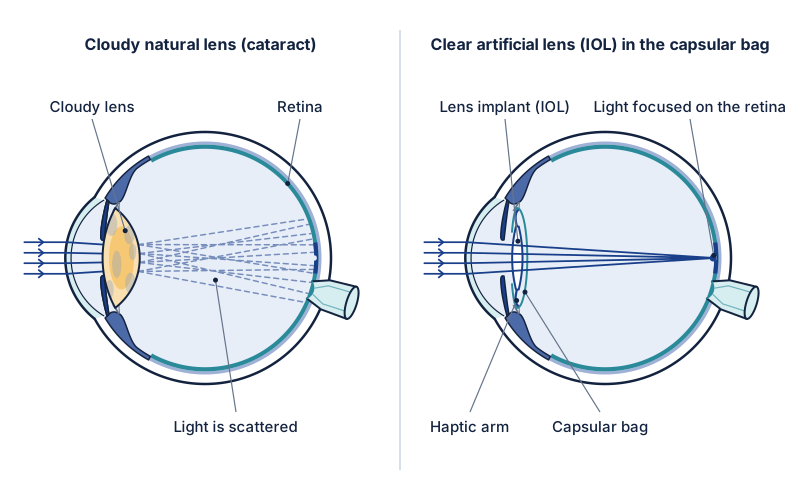
The lens sits behind the iris and focuses light onto the retina. With age, the proteins in the lens gradually change and it becomes cloudy, scattering light instead of focusing it. Most people develop some lens clouding as they get older, and cataract surgery is one of the most commonly performed operations in the UK. Cataracts usually affect both eyes, often at different rates. They are not a growth or a film over the eye, and they do not spread from one eye to the other.
What are the symptoms of Cataract?
- Blurred, cloudy or misty vision that glasses no longer fully correct
- Glare and dazzle from bright sunlight or oncoming headlights at night
- Colours looking faded, yellowed or washed out
- Difficulty reading, recognising faces or watching television
- Needing brighter light to read, or frequent changes in glasses prescription
- Occasionally, double or ghosted vision in one eye
What causes Cataract?
- Ageing — by far the most common cause
- Diabetes, which can make cataracts develop earlier
- Long-term steroid medicines, including some inhalers and tablets
- Eye injury, inflammation or previous eye surgery
- Smoking and heavy alcohol use, which increase the risk
- Congenital or developmental cataract in babies and children, which needs prompt specialist assessment
How is Cataract diagnosed?
An optometrist can usually see a cataract during a routine sight test and refer you if it is affecting your vision. An ophthalmologist examines the lens with a slit-lamp microscope after dilating drops, checks the retina and optic nerve for any other cause of reduced vision, and discusses how the cataract affects your everyday activities. If surgery is planned, biometry measures the eye to calculate the power of the lens implant.
How is Cataract treated?
In early cataract, an updated glasses prescription, brighter lighting and anti-glare measures may be enough. When the cataract affects everyday activities such as reading, driving, work or hobbies, cataract surgery is the effective treatment: the cloudy lens is removed through a small incision using ultrasound (phacoemulsification) and replaced with a clear artificial intraocular lens (IOL), usually as a day case under local anaesthetic. NICE advises that the decision to refer should be based on how the cataract affects your life, not on a sight-test score alone.
Cataract SurgeryHow is this managed in Yorkshire?
Mr Mohyudin sees adults with cataract privately at Spire Elland Hospital and Newmedica Bradford & Huddersfield. NHS cataract care is arranged through your local provider after a referral from your optometrist or GP.
Frequently asked questions
Can cataracts be treated without surgery?
No medicine, eye drop or exercise has been shown to reverse a cataract. In the early stages, stronger glasses, brighter lighting and anti-glare lenses can help. Once the cataract affects your daily life, surgery is the effective treatment.
When should I have cataract surgery?
Consider surgery when the cataract affects activities that matter to you, such as reading, driving, work, hobbies or confidence on stairs. There is usually no need to operate before it troubles you, unless it prevents the monitoring or treatment of another eye condition or stops you meeting the driving eyesight standard.
Can a cataract come back after surgery?
The cataract cannot return because the natural lens is removed. Some people later develop posterior capsule opacification, a clouding of the membrane that holds the lens implant. It is treated with a quick outpatient YAG laser procedure.
Can I drive if I have a cataract?
You must meet the DVLA eyesight standard, which includes reading a car number plate from 20 metres in good daylight, with glasses if you need them. If a cataract stops you meeting the standard, you must not drive. Glare from headlights at night is a common early problem.
Are both eyes operated on at the same time?
Usually one eye is treated at a time, with the second eye a few weeks later if needed. Some centres offer same-day surgery on both eyes for selected patients. Discuss the benefits and risks of each approach with your surgeon.
Book a Consultation
Ask Spire Elland Hospital about current private consultation availability. A GP referral is not required for self-pay.
Book at Spire Elland ↗ Call 01422 324000Routine consultation suitable
Related conditions
Self-Assessment Tool
Not sure if you need to be seen? Take our symptom checker.
Start self-assessment →